Understanding Solid Wood vs. Engineered Wood in US Bedroom Furniture
A practical guide for US homeowners comparing solid wood and engineered wood bedroom furniture. Learn how material choices affect durability, cost, and care, with clear distinctions and buying tips sourced from Vermont-crafted pieces.
By examining historical craft traditions, contemporary manufacturing, and consumer realities, this article threads a narrative about how furniture materials shape our daily lives. We compare timeless solid wood with the modern versatility of engineered wood, anchoring the discussion in US market expectations and the Vermont-made standard for quality.
Why material choice matters in the bedroom
Bedrooms are intimate spaces where furniture must endure daily use, resist the humid rhythms of personal care, and age gracefully with character. The choice between solid wood and engineered wood influences not only durability and price but also weight, repairability, and long-term aesthetics. In Vermont-crafted lines, you can glimpse how these choices translate into real-world performance across dressers, nightstands, and bed frames.
Solid wood refers to pieces cut from whole trees—oak, cherry, maple, walnut, and other species that carry distinctive grain and warmth. Engineered wood (also known as plywood, MDF, or LVL) uses layers or composites to create stable panels that resist warping and can be more cost-efficient. The choice often reflects living patterns: a growing family might prioritize durability and repairability, while a contemporary apartment dweller might seek lightness and modular flexibility.
Three key figures shaping the conversation across eras
-
Jean-Baptiste Leclerc (18th century, Europe) — A craftsman whose furniture journals documented joinery techniques and wood selection practices. Leclerc’s era emphasized solid timber mastery and traditional casework, laying groundwork for enduring wooden furniture philosophies.
Legacy: The reverence for solid timber structure that informs modern expectations for durability and repairability.
-
Frank Lloyd Wright (Early to mid-20th century, United States) — A designer who championed integrated architecture and furniture systems, often using wood in expressive, structure-driven ways. His work underscored the harmony between form, function, and the material language of wood.
Legacy: Elevating wood furniture from utilitarian to sculptural, influencing American tastes for warm, enduring materials.
-
Contemporary Vermont Makers (Late 20th to 21st century, USA) — A generation of craftsmen and women who blend traditional handwork with modern engineered wood technologies. Vermont-based designers emphasize regional sourcing, eco-friendly finishes, and durable construction practices.
Legacy: A modern benchmark for transparency in construction, finish, and provenance, aligning with sustainable and repair-friendly design.
Materials, methods, and what they mean for you
Solid wood construction traditionally relies on frame joints, mortise-and-tenon connections, and hand-finished surfaces. It rewards those who value tactile warmth, grain character, and longevity. With proper care, solid wood can outlive several generations of usage. Yet it can be heavier and more susceptible to seasonal movement and moisture-induced changes if not well-protected.
Engineered wood, by contrast, uses layers of veneer or composite cores bonded under pressure with adhesives. This creates stable panels that resist warping and can be engineered for lighter weight. Engineered wood often pairs with high-quality veneers or laminates to mimic the look of solid wood while offering tighter color control and cost efficiency. Modern bedroom sets—like the Vermont-crafted Modern American collections—demonstrate how engineered cores can be combined with real-wood veneers or solid edges to achieve a balance of price, durability, and visual warmth.
In practice, you will find that Vermont makers often favor solid wood for key surfaces and joinery where strength matters, while carefully engineered layers provide consistent performance in larger case pieces or pieces requiring crisp, stable dimensions. The result is a spectrum where you can select a dresser with solid-die backing and solid-wood drawers or a dresser with solid face panels and engineered interiors designed to resist humidity and weight over time.
Durability, care, and long-term value
Durability is a function of material, construction, finish, and usage. Solid wood has the potential to be sanded and refinished, restoring its appearance after years of use. However, beveled edges and hand-finished veneers may require extra care to prevent edge damage. Engineered wood can resist warping and is often finished with durable topcoats that help protect against household humidity, spills, and everyday knocks. For a US bedroom, the right combination often means solid wood for the most visible surfaces (such as drawer fronts or table edges) and engineered cores for internal panels or large, weight-bearing sections where dimensional stability is prized.
Care guidance matters. Vacuum or dust regularly, wipe with a damp cloth as needed, and avoid aggressive water exposure. Use coasters and avoid placing hot items directly on wood surfaces. For solid wood, oil or wax finishes can be refreshed to revive luster and protect the surface; engineered wood often benefits from a polymer-based sealant or lacquer that resists stains and moisture. Vermont pieces frequently rely on eco-friendly oil finishes that enhance grain without compromising longevity.
Importantly, consider environmental factors. In a damp bathroom-adjacent bedroom, moisture management through proper finishes and humidity control helps preserve both solid wood and engineered wood surfaces. When in doubt, choose pieces designed for durability in humid environments and with proven track records of repairability in a US market context.
Case studies: Vermont pieces that illuminate the choices
Modern American 9-Drawer Dresser
Solid wood, Vermont-made, with eco-friendly oil finish (production: 16–20 weeks)
This dresser exemplifies the blend of solid wood durability with a contemporary silhouette. Choose natural cherry or walnut and enjoy a durable, heirloom-worthy piece whose finish emphasizes wood grain and warmth. Its construction emphasizes traditional joinery and a refined, long-lasting presence in the bedroom.
Product reference: Modern American 9-Drawer Dresser (435? series)
Modern American Bench
Solid wood bench, hand-made in Vermont; eco-friendly oil finish; durable and versatile
A bench designed for entryways, bedrooms, or living areas, the Modern American Bench embodies the principle that beauty and utility can coexist in a single, enduring form. The bench’s solid wood construction and time-honored lines prove that modest pieces can anchor a room without overpowering it.
Product reference: Modern American Bench (4359)
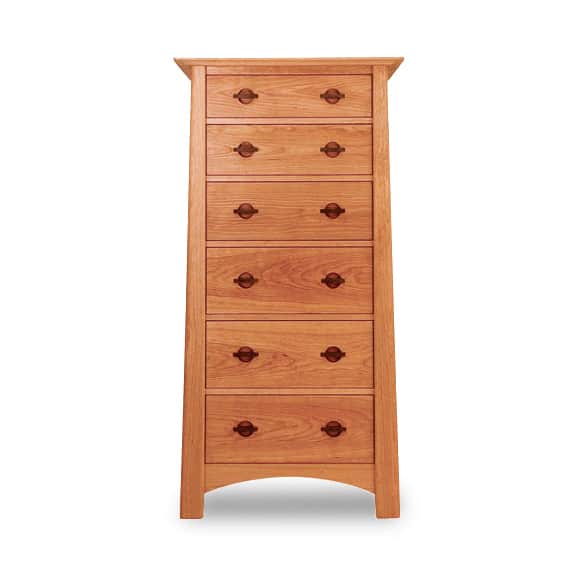
Cherry Moon Lingerie Chest
Handmade in sustainably harvested wood with eco-friendly oil finish; refined hardware
The Cherry Moon Lingerie Chest demonstrates how texture, grain, and finish interact with design details like reverse-tapered legs and half-moon pulls. It embodies the high-value proposition of solid wood with a refined, quiet silhouette that can anchor a traditional or modern bedroom with subtle elegance.
Buying tips: how to choose between solid wood and engineered wood
- Assess the drawer fronts and frames: solid wood fronts with engineered interiors can offer both warmth and stability.
- Check the finish: eco-friendly oils and durable topcoats protect grain while aligning with sustainable goals.
- Evaluate joinery: mortise-and-tenon, dovetails, and reinforced edges indicate long-term durability.
- Ask about air-dried vs. kiln-dried stock: wood that is properly seasoned resists movement and cracking.
- Consider weight and installation: solid wood pieces tend to be heavier and may require careful handling, while engineered wood can offer lighter options with robust internal cores.
In the US market, particularly in Vermont-made lines, the balance tends toward a hybrid approach: solid-wood surfaces or frames where the structure benefits from natural strength, with engineered panels elsewhere to optimize stability, weight, and cost. This approach delivers a practical path for homeowners seeking long-term value without sacrificing tactile warmth or visual depth.
Conclusion: making an informed choice for US bedrooms
Solid wood and engineered wood each offer distinct advantages. The former delivers timeless warmth, the potential for refinishing, and a storied sense of durability. The latter delivers stability, precise dimensions, and cost-conscious versatility. For a US bedroom, a thoughtful blend—rooted in traditional Vermont craftsmanship and aligned with contemporary finish techniques—can yield pieces that age gracefully while fitting modern budgets and rooms.
Whether you prioritize the patina of a cherry dresser, the quiet reliability of a bed frame built from engineered cores, or a hybrid solution that harmonizes both material families, the market provides a spectrum of choices. By focusing on construction quality, finishes, and provenance, you can assemble a bedroom ensemble that remains functional, beautiful, and relevant for years to come.
A note on the Vermont standard
In a market saturated with options, Vermont-crafted pieces set a high bar for material integrity, joinery, and finish. The emphasis on regional production, durable finishes, and careful wood selection offers a blueprint for durable MDF-free and glue-rich hybrids that stand up to US living conditions. This is a reminder that the space you choose for sleep, study, and storage deserves the best combination of beauty, strength, and longevity.
Product spotlight
Modern American Bench
Solid wood bench handcrafted in Vermont. Offered in natural cherry, maple, or walnut with an eco-friendly oil finish. Timeless lines meet durable construction, making it a versatile anchor for bedrooms, entryways, or living spaces.
$1,456.00
Featured
Material: Solid wood
Finish: Eco-friendly oil
Origin: Vermont, USA